FLAGSHIP ENTERPRISE AI ENGINEERING Azure Databricks · Enterprise RAG · Healthcare AI

Engineering Enterprise Intelligence with Databricks & RAG

NextGen TechEdge engineered the data processing, knowledge retrieval and conversational AI architecture behind an enterprise healthcare AI solution—bringing together Azure Databricks, Delta Lake, vector search, automated ingestion and context-aware AI interactions.

DELIVERED ENGINEERING CAPABILITIES
01 / 06

Engineered enterprise RAG architecture using Azure Databricks and semantic vector search.

Azure Databricks Delta Lake Mosaic AI Vector Search MLflow pyfunc Python & PySpark Amazon S3 Retool Enterprise
keywell.ai/platform
LIVE ENTERPRISE RAG
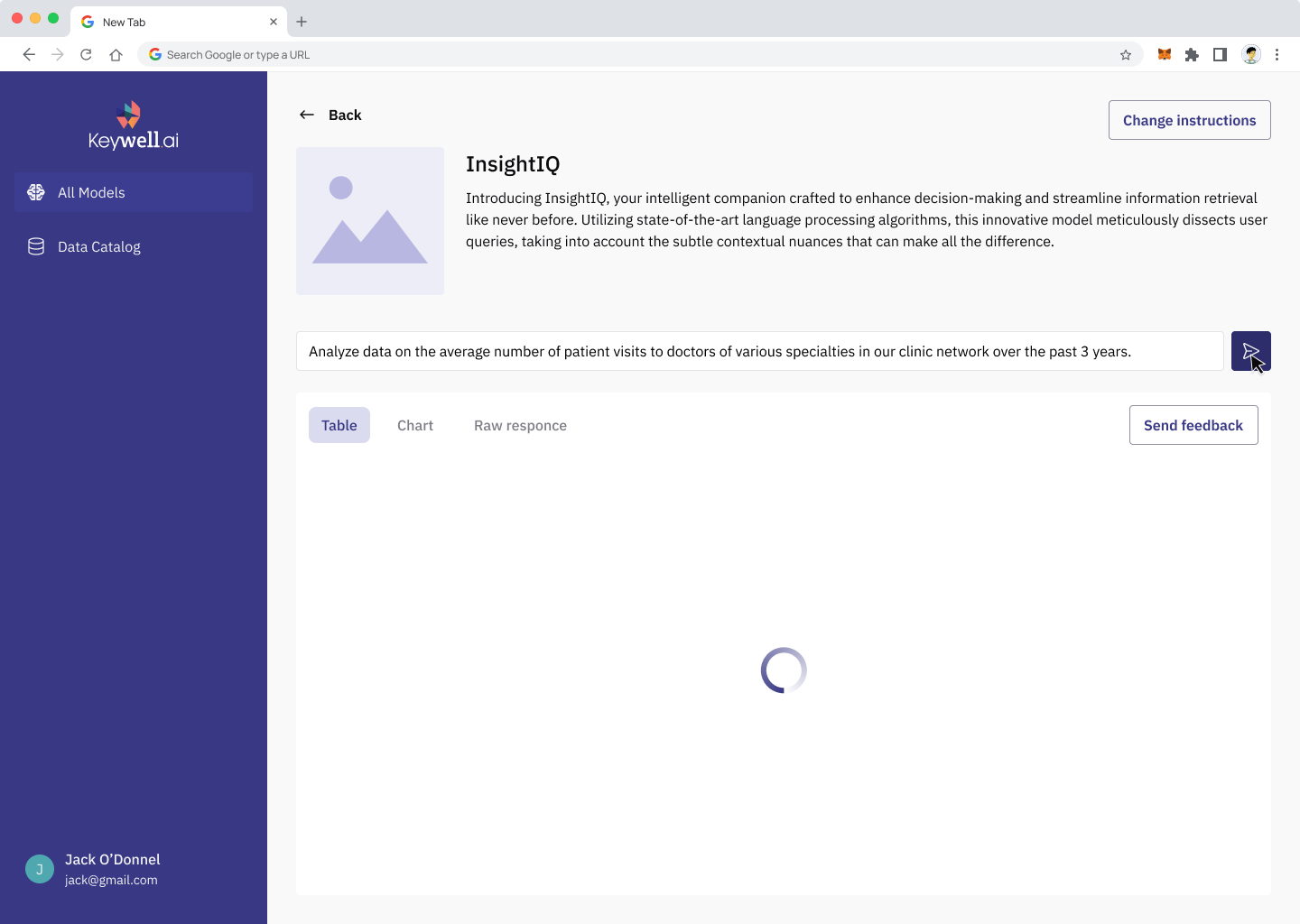
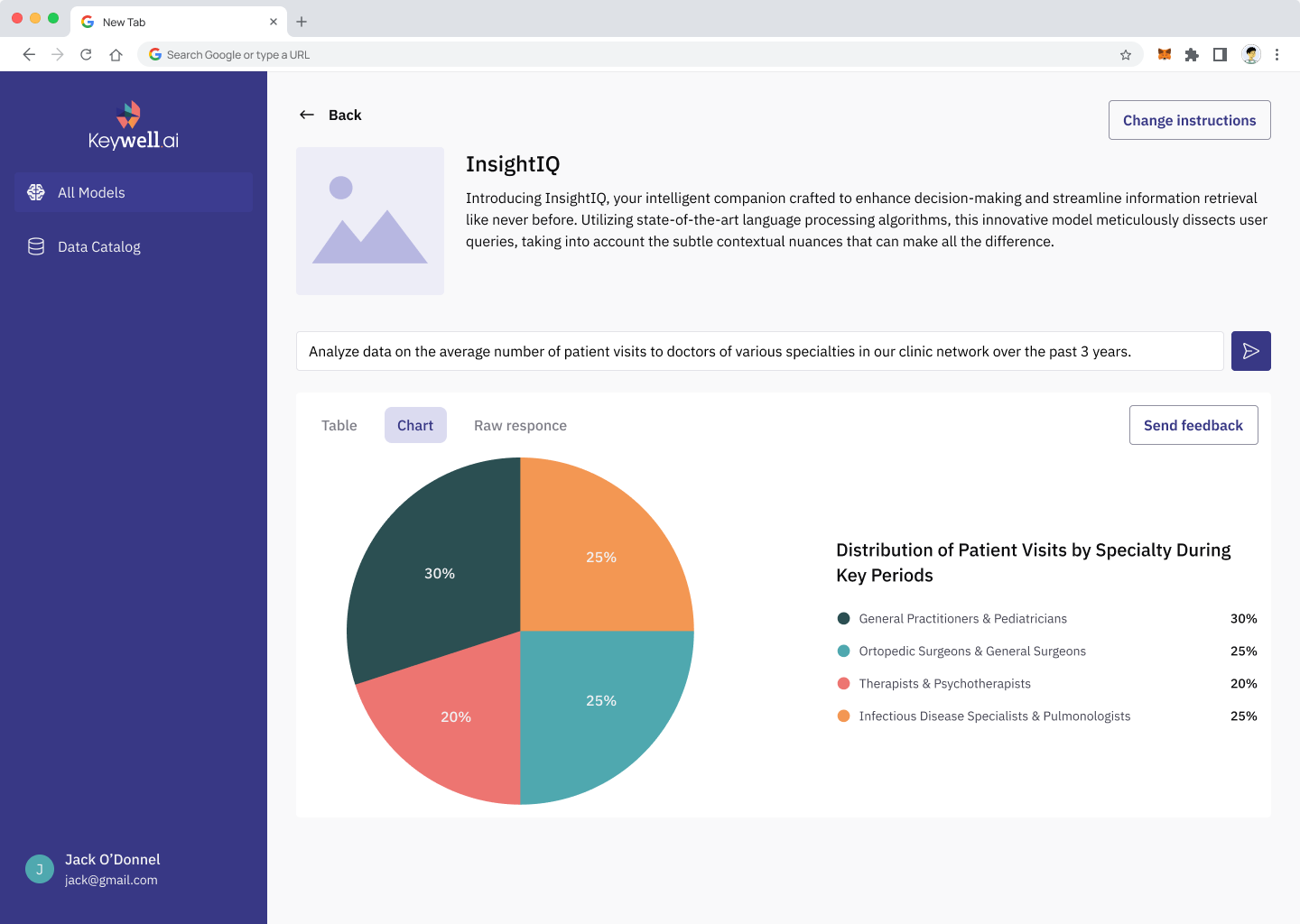
Keywell.ai Healthcare Intelligence Platform Interface
Decoupled Lakehouse Parameterized Delta Tables Custom MLflow Serving Role-Based Scoping
1. BUSINESS & TECHNICAL CONTEXT

The Engineering Behind Enterprise Healthcare AI

For Keywell.ai (keywell.ai), NextGen TechEdge Solutions engineered the data and AI architecture behind an enterprise retrieval-augmented generation (RAG) platform. The engagement combined Python-based data processing, Databricks Delta tables, vector retrieval, custom model serving, model-to-source mappings, and an application interface for querying enterprise clinical reference material.

Healthcare organizations maintain extensive libraries of clinical guidelines, payer coverage policies, and operational documentation across disparate repositories. A standard off-the-shelf generative AI wrapper fails because it cannot guarantee source truth, lacks role-based knowledge boundaries, cannot parse complex tabular medical data, and risks hallucinations.

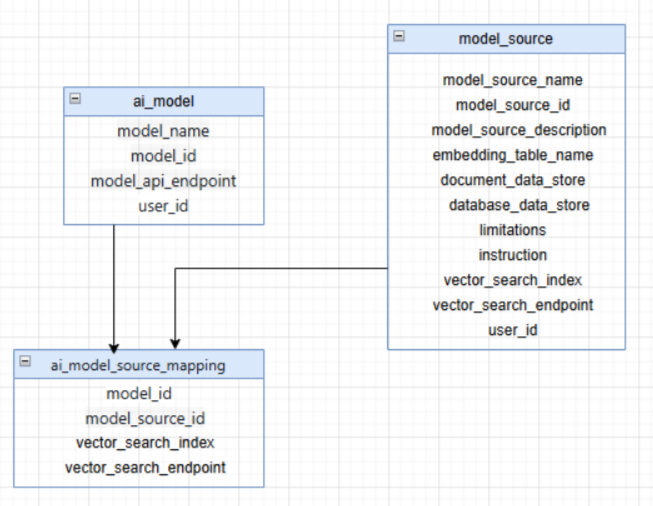
NextGen engineered a decoupled architecture separating knowledge-source configuration from model inference. Rather than hard-coding a single repository or table, the design represents sources, storage locations, embedding tables, vector indexes, and serving endpoints as metadata in Delta tables, turning complex enterprise knowledge into reliable, context-aware answers.

Client Profile

Keywell.ai — an advanced healthcare intelligence and clinical automation platform designed to assist care coordinators, medical directors, and healthcare analysts across the United States.

Technical Architecture

Azure Databricks Lakehouse, Delta Lake, Mosaic AI Vector Search, MLflow pyfunc custom serving wrapper, Python (PySpark/LangChain), Amazon S3 / ADLS Gen2, and Retool Enterprise UI.

Scope of Engineering

Decoupled dual-pipeline RAG architecture, automated document chunking and normalization library, model-to-source metadata schema, role-based access control, and dynamic visual analytics generation.
2. THE ENGINEERING CHALLENGE

Six Architectural Hurdles in Enterprise Healthcare RAG

Enterprise knowledge rarely lives in one format or system. Making enterprise reference material useful to a language model requires solving intricate distributed data, retrieval precision, state management, and strict security constraints.

01

Heterogeneous Knowledge Ingestion

Reference material lives across PDFs, Word documents, spreadsheets, and plain-text files alongside structured SQL records. The ingestion pipeline required normalizing disparate file types into unified document structures without loss of critical layout semantics.

02

Multi-Format Normalization & Chunking

Simple character-based chunking breaks clinical context across tables and conditional clauses. We engineered a reusable Python extraction library that preserves section headers, tabular hierarchies, and paragraph boundaries.

03

Scalable Vector Indexing & Metadata

Associating different models with distinct sets of reference material required representing sources, storage locations, embedding tables, and vector indexes as parameterized Delta metadata rather than hardcoded endpoints.

04

Context Assembly & Conversational Continuity

Healthcare queries span multi-turn explorations with follow-up clarifications. The platform required assembling relevant vector chunks, system instructions, and pruned conversation history into compact prompts that fit model context windows.

05

Role-Based Access Control & Boundaries

Different teams within an organization must be restricted to their authorized knowledge silos. We engineered metadata permission masks in Delta Lake so that vector retrieval queries dynamically scope results by user entitlement.

06

Production Model Serving & Latency

Deploying RAG in enterprise applications demands reliable model serving. Packaging the full retrieval and synthesis logic as a custom MLflow pyfunc container enabled standard deployment on Databricks Model Serving clusters.

3. CONCEPTUAL SYSTEM ARCHITECTURE

Inside the Databricks-Powered RAG Architecture

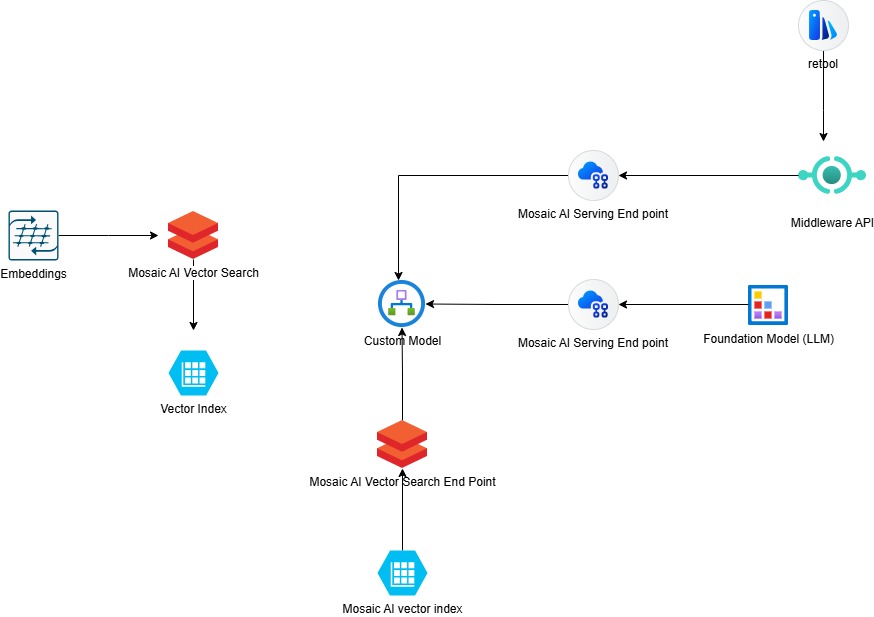
NextGen TechEdge engineered a decoupled dual-pipeline architecture on Azure Databricks, cleanly separating offline document ingestion and embedding pipelines from low-latency real-time retrieval and generation.

OFFLINE / ASYNCHRONOUS INGESTION

Flow A: Ingestion & Hybrid Embedding Pipeline

Step 1

Enterprise Document Sources

S3 buckets & Cloud Storage holding clinical policies, guidelines, Word docs, spreadsheets, and database tables.

Step 2

Python Chunking Library

Custom extraction and normalization pipeline parsing multi-format documents and tagging structural metadata.

Step 3

Parameterized Delta Tables

Bronze and Silver Delta Lake tables storing normalized text chunks, version history, and schema definitions.

Step 4

Embedding Generation

Distributed GPU embedding jobs vectorizing text chunks and persisting vector arrays alongside source attributes.

Step 5

Mosaic AI Vector Search Index

Self-syncing Delta Sync Vector Search index maintaining nearest-neighbor graphs with live metadata filtering.

METADATA GOVERNANCE & RBAC BRIDGE: Model-to-Source Mapping • Source-Level Permission Masks • Tenant Isolation • Audit Trails
REAL-TIME / INFERENCE ENGINE

Flow B: Query Processing, Semantic Retrieval & Generation

Step 1

Clinician / User Query

Healthcare professional submits clinical question or policy inquiry via Keywell web interface or Retool console.

Step 2

Context Assembly

Query string is embedded in real-time, accompanied by user authorization tokens and active session history.

Step 3

Mosaic AI Vector Retrieval

Databricks Vector Search executes similarity lookup, filtered by active source permissions and metadata boundaries.

Step 4

Custom MLflow pyfunc Serving

Containerized MLflow serving endpoint compiles prompt with retrieved citations, clinical guardrails, and model instructions.

Step 5

Multi-Modal Output Generation

Served LLM synthesizes evidence-based answer, cites document section headers, and generates dynamic visual analytics.

4. ENGINEERING DEEP DIVE

Technical Deep Dive & Architecture Modules

A comprehensive breakdown of how each layer of the enterprise intelligence platform was designed, engineered, and hardened for production scale.

01

Azure Databricks Data Lakehouse & Delta Architecture

The data foundation relies on Databricks Delta Lake, establishing an enterprise medallion architecture for multi-tenant knowledge management.

  • ACID Guarantees: Ensures concurrent document indexing never corrupts vector catalogs or causes inconsistent read states.
  • Delta Time Travel: Enables auditing of document revisions, showing exactly which policy version was used to generate an answer on any past date.
  • Optimized Partitioning: Delta tables partitioned by tenant ID, document class, and ingestion batch for high-efficiency queries.
  • Schema Evolution: Handles evolving document attributes and metadata tags without breaking downstream serving endpoints.
02

Reusable Document Extraction & Chunking Library

Healthcare documentation is filled with nested tables, footnotes, and complex headings. Custom extraction logic ensures chunk coherence.

  • Multi-Format Parsers: Dedicated extractors for PDF, DOCX, XLSX, and TXT files, normalizing text into clean markdown structures.
  • Table-Preserving Extraction: Proprietary tabular parser converts complex clinical grids into structured markdown tables with preserved column semantics.
  • Semantic Sliding Windows: Token-aware chunking bounded by logical headers and paragraph breaks to prevent splitting critical conditional clauses.
  • Deduplication Engine: Content hashing prevents redundant re-indexing of identical clinical bulletins and vendor updates.
03

Mosaic AI Vector Search & Hybrid Retrieval

High-precision retrieval combines dense semantic vector matching with strict metadata boundary enforcement.

  • Managed Delta Sync: Databricks Mosaic AI Vector Search indices synchronized directly with Delta Lake source tables.
  • Hybrid Retrieval: Combines lexical keyword matching (crucial for exact drug names and medical codes) with dense vector similarity.
  • Pre-Retrieval Metadata Scoping: Hard tenant isolation and role permission filters injected into vector lookups at execution time.
  • Sub-Second Response Times: Optimized index shards delivering candidate document matches in low-latency turnaround times.
04

Custom MLflow pyfunc Model Serving Architecture

Rather than separating retrieval and generation across multiple web services, NextGen packaged the entire RAG pipeline into an MLflow pyfunc model wrapper.

  • Unified Deployable Artifact: Bundles prompt compilation, vector lookup, LLM inference, and citation assembly into a single container.
  • Databricks Model Serving: Hosted on Databricks Model Serving clusters with automated endpoint management and health monitoring.
  • Source Citation Grounding: Strict system prompt templates mandate exact section and paragraph citations for every assertion in the response.
  • Model Flexibility: Supports open-source LLMs hosted directly on Databricks clusters alongside external commercial foundation endpoints.
05

Fine-Grained Permissions & Source Access Control

Enterprise deployment requires granular governance. Different organizational teams must be restricted to their authorized knowledge silos.

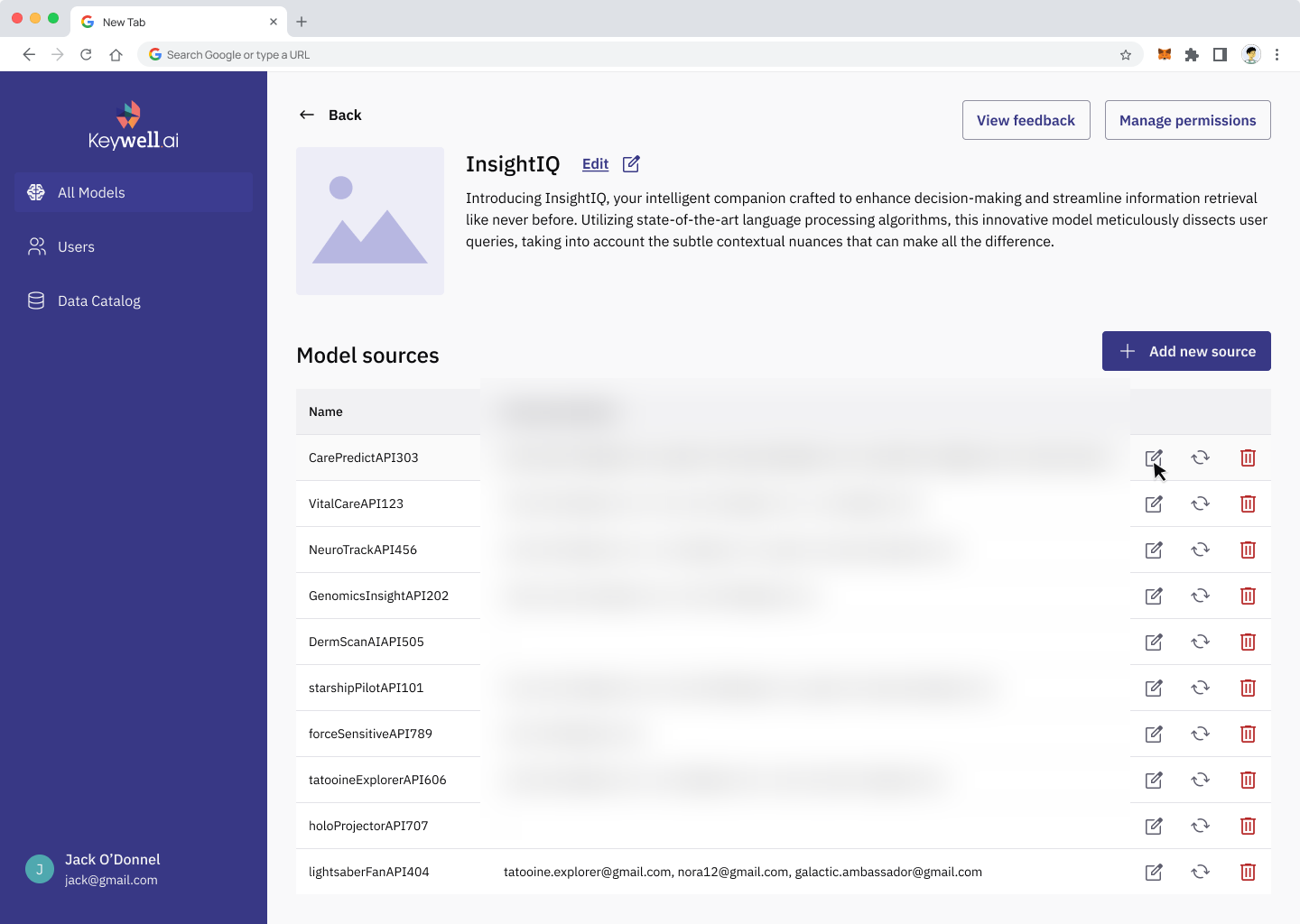
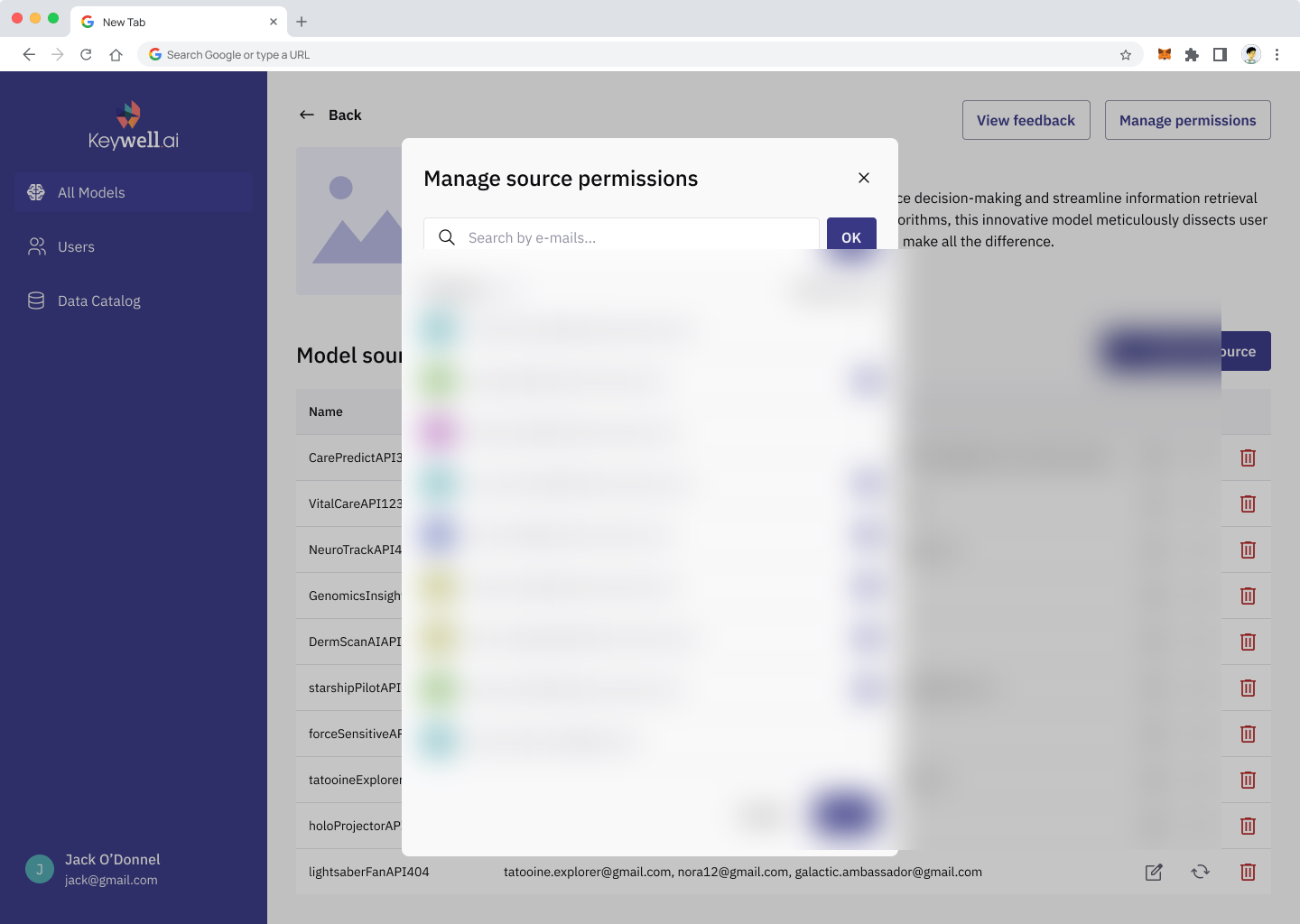
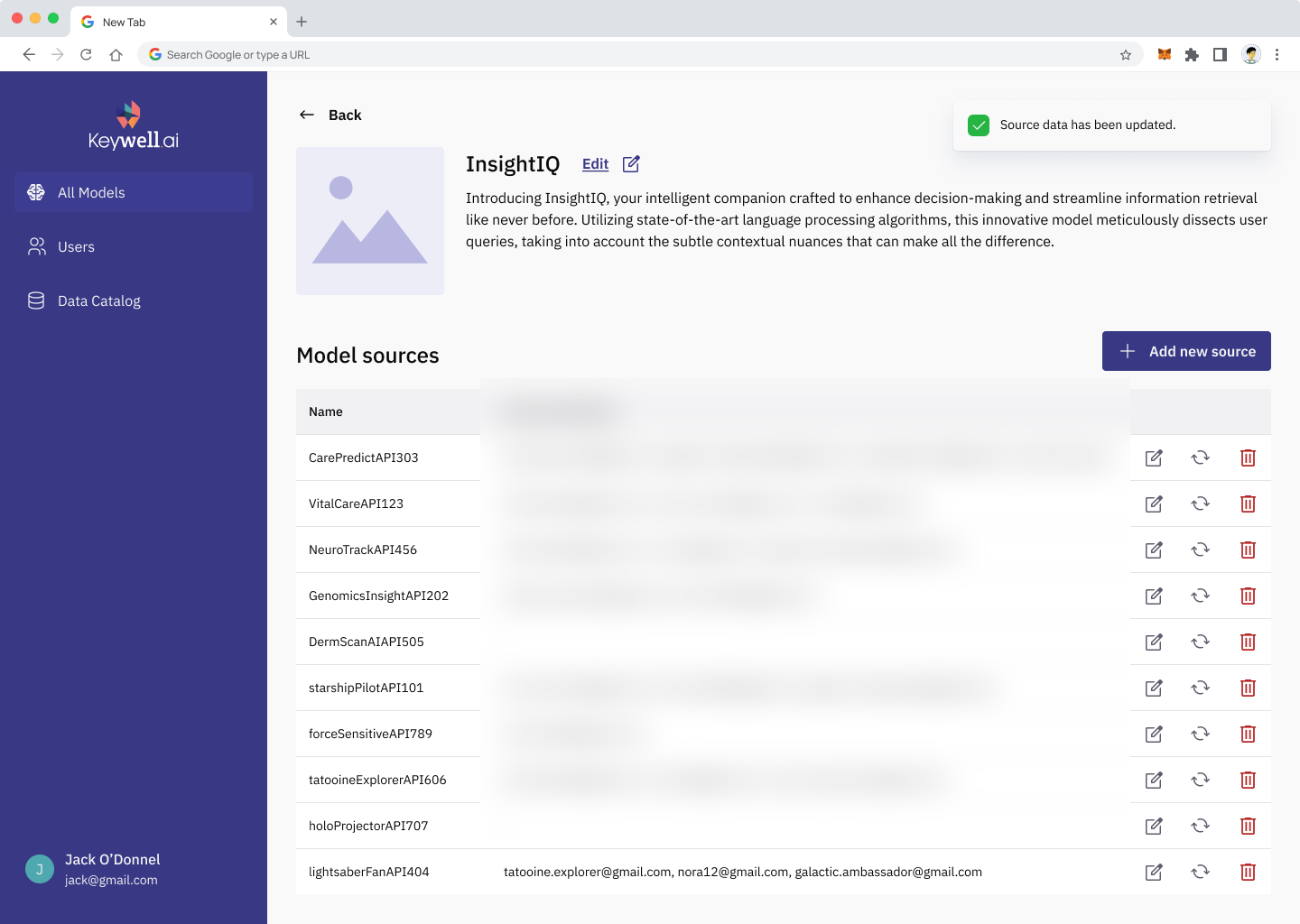
  • Model-to-Source Mapping: Decoupled metadata schema mapping specific AI models to granular enterprise knowledge repositories.
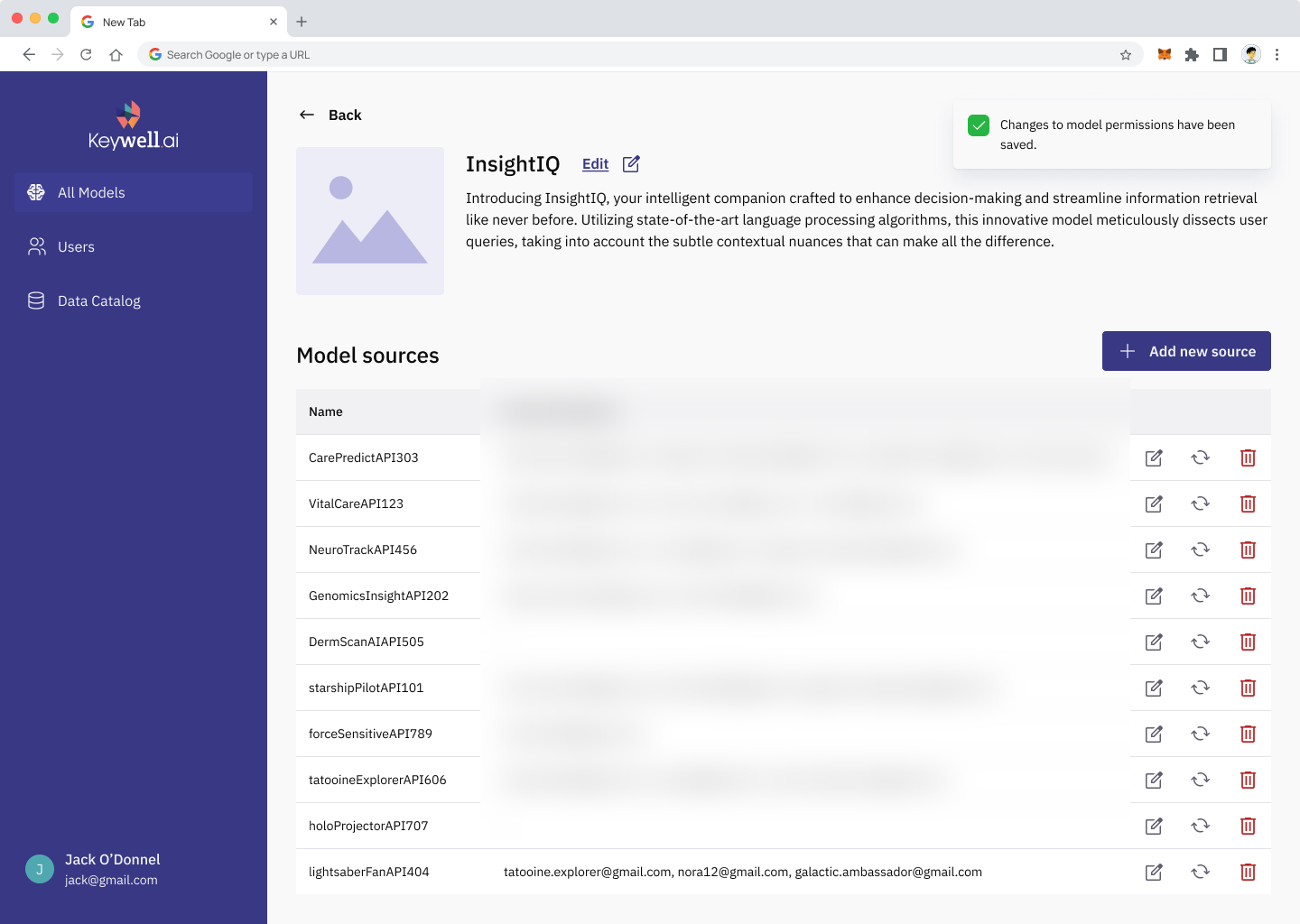
  • Retool Governance Interface: Custom administrative console enabling administrators to assign knowledge repositories to user roles.
  • Dynamic Permission Filters: User session entitlements dynamically passed to the vector search index, preventing unauthorized document retrieval.
  • Audit Logging: Every query, retrieved document chunk, and model completion is immutably logged for clinical governance.
06

Production Engineering & Architectural Considerations

Documented implementation distinction: The platform establishes working metadata, model registration, vector indexing, and inference workflows.

  • Continuous Sync Architecture: Background synchronization pipelines designed as an architectural requirement for automated refresh.
  • Cost-Aware Embedding Generation: Reusable chunking libraries and batching compute reduce redundant embedding generation costs.
  • Session Context Pruning: Summarizes earlier conversation turns to keep prompt token consumption predictable during extended dialogs.
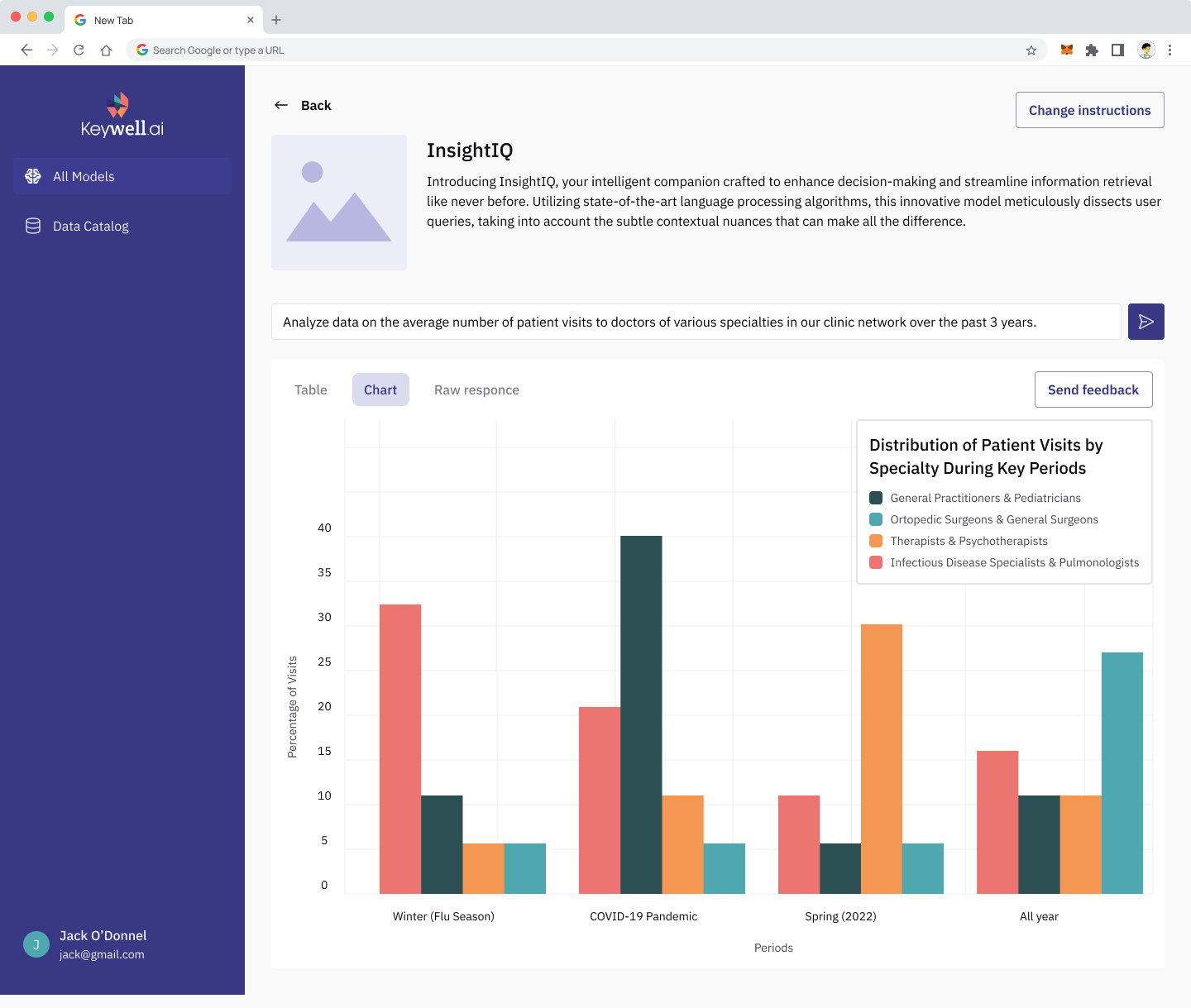
  • Dynamic Data Visualization: Generates structured JSON alongside narrative answers, rendering interactive bar charts and pie charts in the UI.
DOCUMENTED ARTIFACTS

Implementation Screenshots & System Visuals

Authentic project captures and architecture documentation drawn directly from technical project records:

HEALTHCARE AI IN PRODUCTION

The Platform: Keywell.ai

Designed specifically for healthcare teams, Keywell translates complex clinical knowledge, health plan rules, and patient data into immediate, actionable answers.

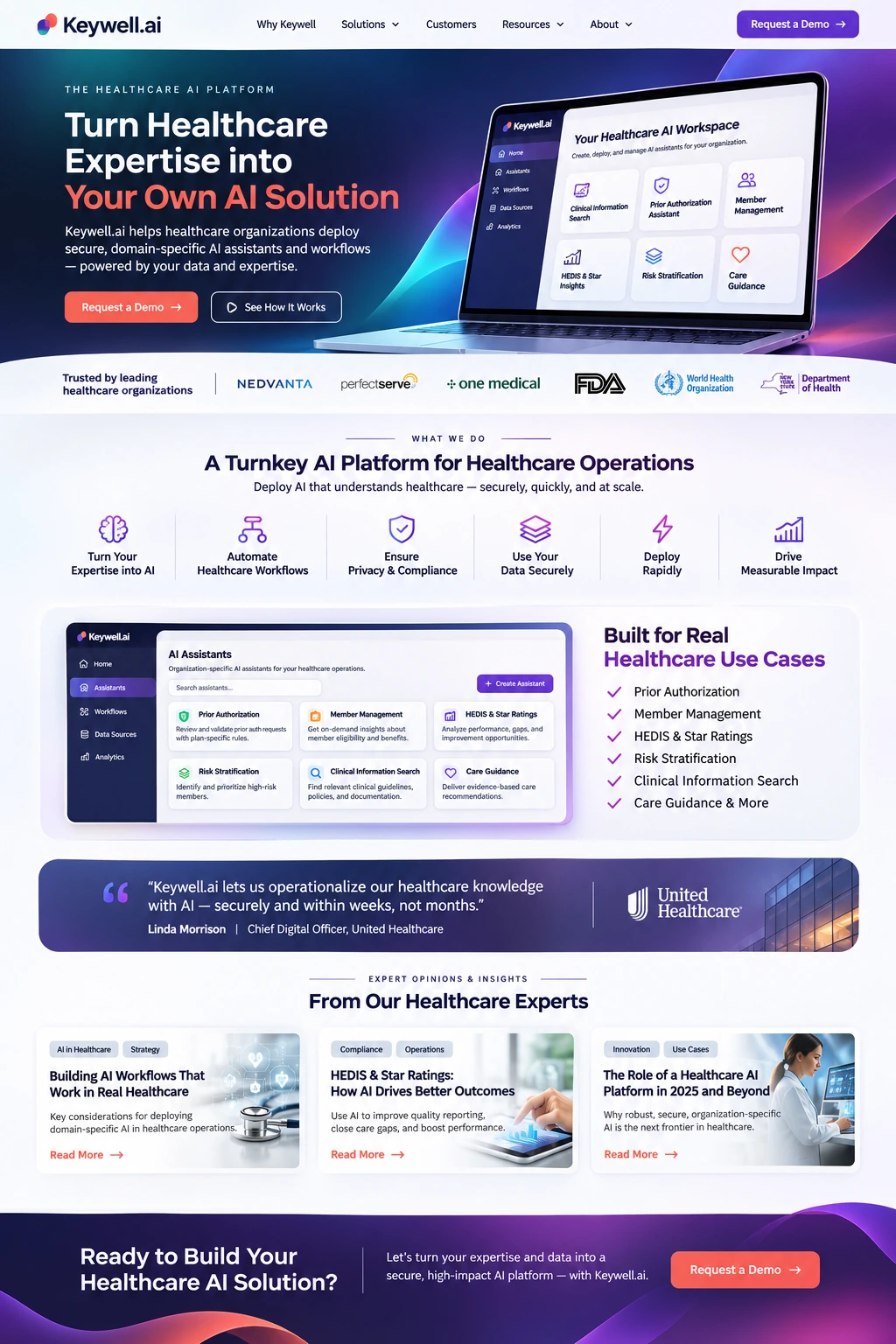
Keywell.ai — Healthcare AI built for humans
Keywell.ai Platform Homepage and Healthcare Capabilities

What the Databricks & RAG Architecture Enables

By grounding generative models in verified enterprise data and Lakehouse pipelines, Keywell empowers healthcare organizations with six mission-critical capabilities:

Clinical Policy Navigation

Instant retrieval of exact coverage criteria, clinical evidence, and specialty protocols with verified citations.

Prior Authorization Acceleration

Cross-references incoming clinical requests against payer requirements, identifying missing documentation in seconds.

Member Risk Stratification

Fuses unstructured clinical notes with structured metrics to produce comprehensive member health summaries.

HEDIS & Star Ratings Optimization

Surfaces quality measure gaps across patient populations and recommends clinical actions to improve plan scores.

Contextual Care Guidance

Delivers evidence-based recommendations directly to care managers tailored to individual patient comorbidities.

Dynamic Visual Data Generation

Compiles and renders interactive bar charts, distribution graphs, and tabular summaries directly inside responses.

DOCUMENTED OUTCOMES

From Enterprise Data to Contextual Intelligence

Verified engineering deliverables achieved through the implementation of Azure Databricks, Delta Lake, and enterprise RAG:

Unified

Lakehouse Foundation

Document ingestion, Delta table storage, embedding pipelines, and vector indices unified on Databricks.

Reusable

Chunking Library

Modular Python pipeline normalizing PDF, Word, spreadsheets, and SQL tables into parameterized Delta tables.

RBAC

Source Permissions

Fine-grained access controls mapping authorized knowledge bases to user roles with zero cross-tenant leakage.

Visual

Multi-Modal Answers

Natural language clinical responses dynamically coupled with interactive bar charts and distribution graphs.

MLflow

Containerized Serving

Custom pyfunc model wrapper fronting Databricks Model Serving clusters for reliable, versioned deployment.

WHY ENTERPRISES CHOOSE US

We Build the Engineering Behind Enterprise AI

Most organizations do not lack AI models—they lack the robust data infrastructure, retrieval architecture, and systems engineering required to make AI work in production.

Data Engineering First

We know that production AI is 80% data engineering. Without clean ingestion, ACID Delta Lake pipelines, and intelligent chunking, RAG models fail. We engineer the foundation first.

Deep Databricks & Cloud Mastery

Certified cloud architects with deep hands-on expertise across Azure Databricks, Delta Lake, Mosaic AI Vector Search, MLflow serving, and enterprise cloud infrastructure.

Full-Stack Systems Integration

We don't just write Jupyter notebooks. We build end-to-end applications: from distributed data pipelines to custom enterprise front-ends (React, Retool) and operational APIs.

Security & Governance by Design

Built-in role-based access control, tenant isolation, and audit logging so your enterprise can deploy AI solutions with complete security and compliance confidence.

LET'S BUILD ENTERPRISE INTELLIGENCE

Your Enterprise Data Deserves More Than a Generic Chatbot.

Let's engineer a production-ready RAG architecture on Azure Databricks tailored to your domain, data sources, and security standards.