
 Enlarge
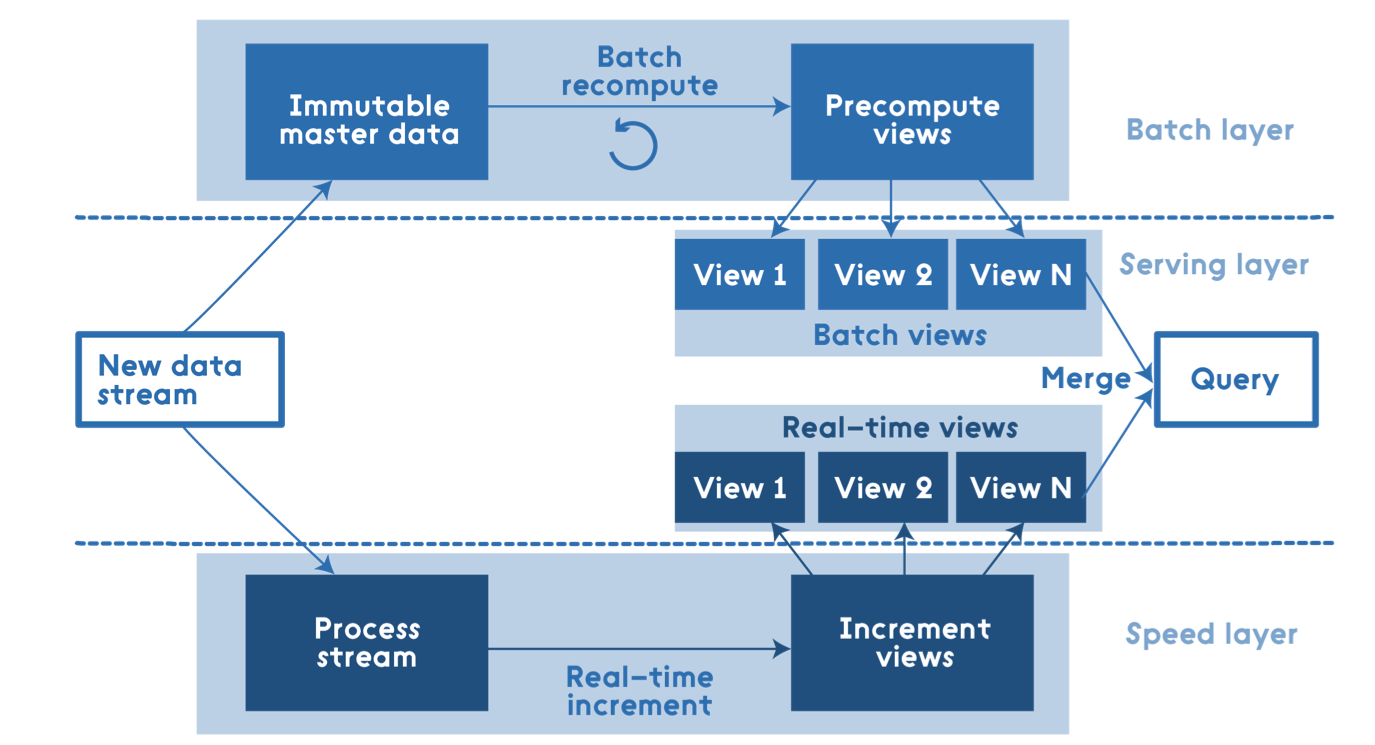
DMP Lambda Architecture — Ingestion tier, batch layer, real-time speed layer, and analytical serving store.
A data management platform brings fragmented information into a coherent structure so teams can analyze behavior, build useful segments, and support more relevant digital experiences. The core challenge is turning heterogeneous events and records into reliable, queryable information.
Documented architecture and engineering approach. Does not claim a specific production deployment without evidence.
Modern digital platforms rely on rich audience signals to personalize user journeys, deliver contextual advertising, and evaluate customer retention. However, raw interaction data is naturally scattered across web properties, mobile SDKs, CRM databases, ad network touchpoints, and authorized third-party data providers.
Data arrives through websites, applications, CRM systems, advertising interactions, offline records, and third-party feeds. Each source has different formats, identities, update frequencies, and quality constraints. Without a clear architecture, segmentation and analysis become inconsistent and difficult to scale across millions of daily user events.
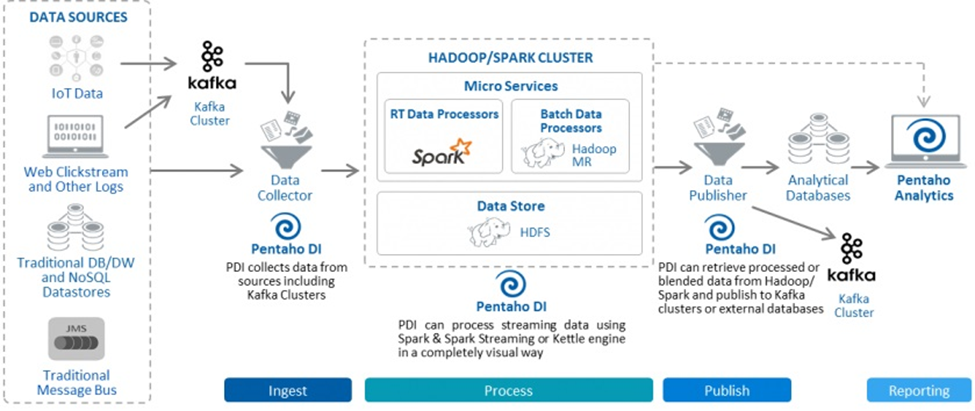
The documented architecture follows the principles of Lambda Architecture, combining a batch layer for historical computation, a speed layer for recent events, and a serving layer for accessible analytical views. Apache Spark is discussed as a processing engine across batch and streaming-oriented workloads, with Pentaho integration for broader data workflows. Classification, taxonomy design, and data preparation help turn raw inputs into interpretable audience segments.
Web, mobile SDK, CRM, offline & authorized third-party feeds
Schema enforcement, identity harmonization & consent filtering
Immutable master dataset processing & historical aggregation
Real-time delta computation & low-latency recency window
Pre-computed multidimensional index & fast query read views
Hierarchical attribute tagging & rule-based segment generator
Downstream DSP sync, BI dashboards & personalization APIs
Data ingestion, parallel speed/batch processing paths, and analytical serving views. (Conceptual architectural flow).
Genuine project captures and architecture documentation drawn directly from technical project records:
Enlarge
DMP Lambda Architecture — Ingestion tier, batch layer, real-time speed layer, and analytical serving store.
 Enlarge
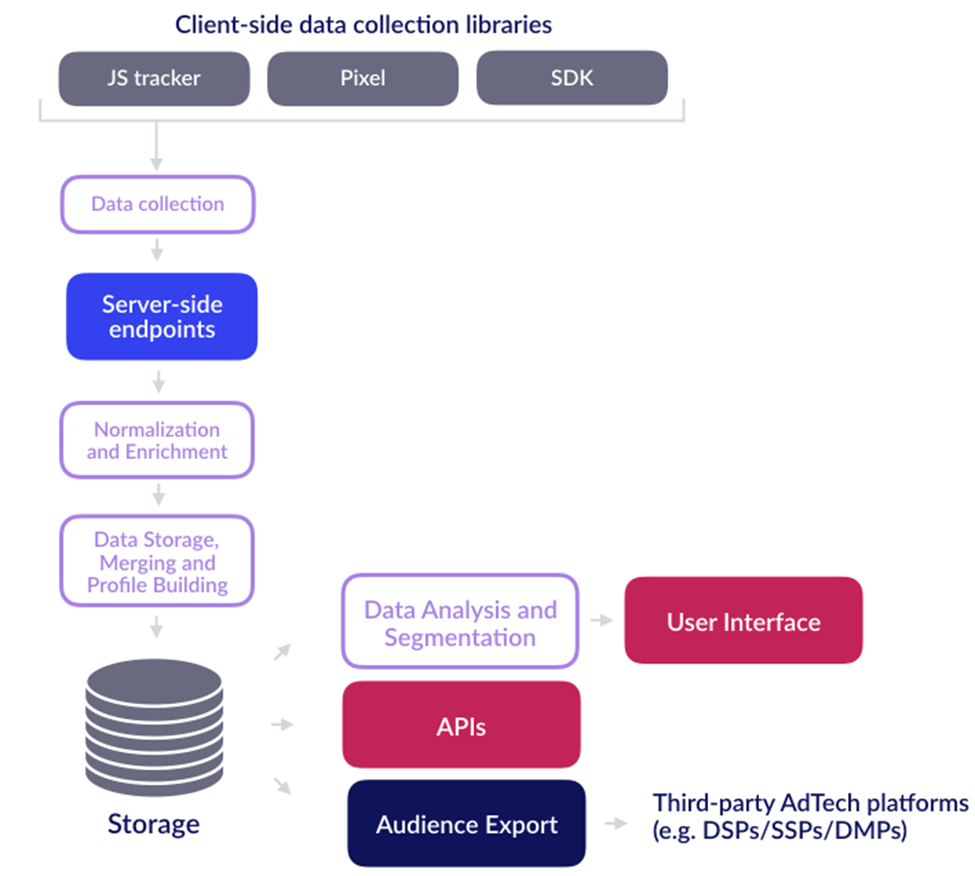
Multi-source ingestion pipeline, taxonomy classification rules, and audience segment generation.
 Enlarge
Data transformation steps, schema normalization, and dimensional analytical serving layer.
Audience intelligence must be designed around lawful collection, appropriate consent, purpose limitation, data minimization, access controls, and the applicable privacy requirements (GDPR, CCPA/CPRA). Historical identity-matching concepts should be presented as architectural context, not as unrestricted tracking practices.
Documented technologies, frameworks, and protocols utilized across this domain:
The work demonstrates architectural planning for a data platform that combines historical and recent information to support segmentation and analytics.