
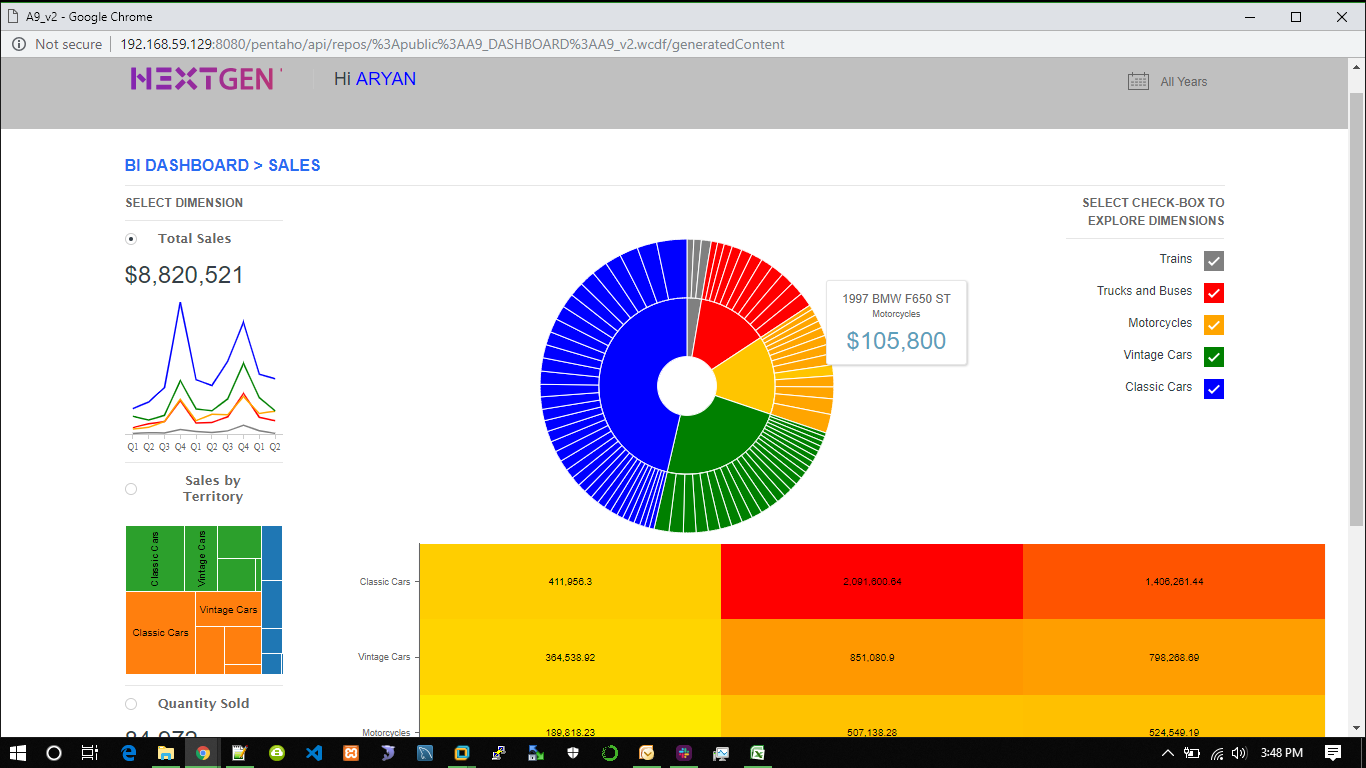
 Enlarge
01 — Configure source connections and ETL steps in Pentaho Data Integration (Kettle).
Useful reporting begins long before the dashboard. This project demonstrates the complete journey from heterogeneous source data to structured warehouse models, analytical cubes, and interactive business intelligence interfaces.
Documented implementation workflow and application screenshots illustrating integration between data engineering and the business intelligence layer.
Enterprise decision-makers depend on unified reporting to understand operational throughput, sales performance, and resource allocation. However, operational databases are optimized for rapid row-level transactions (OLTP), making analytical aggregations slow, fragile, and disruptive to production systems.
Organizations often have data distributed across databases, files, APIs, and business applications. Raw data must be cleansed, reconciled, transformed, and modeled before business users can trust reports. The platform must also support usable queries, access controls, and acceptable response times as data volumes grow.
Pentaho Data Integration (Kettle) was used for ETL design and transformation workflows. Pentaho Schema Workbench supported multidimensional OLAP schema design, including dimensions, measures, and hierarchies. Pentaho Business Analytics provided reporting and dashboard functionality. The implementation workflow also considered MySQL indexing, remote server deployment, and data validation. Broader architectural materials discuss Lambda-style batch and streaming integration, Apache Spark, role-based access, and cloud/on-premises design choices.
Relational DBs, flat files, transaction logs & external APIs
Record cleansing, type casting, surrogate key assignment & deduplication
Star schema with central fact tables & conformed dimension tables
Pentaho Schema Workbench: dimensions, levels, hierarchies & measures
MDX calculation, in-memory caching & aggregated rollup execution
Pentaho Business Analytics: drill-downs, charts & scheduled report delivery
Source ingestion, ETL transformation, dimensional modeling, OLAP cubes, and interactive reporting dashboards.
Genuine project captures and architecture documentation drawn directly from technical project records:
Enlarge
01 — Configure source connections and ETL steps in Pentaho Data Integration (Kettle).
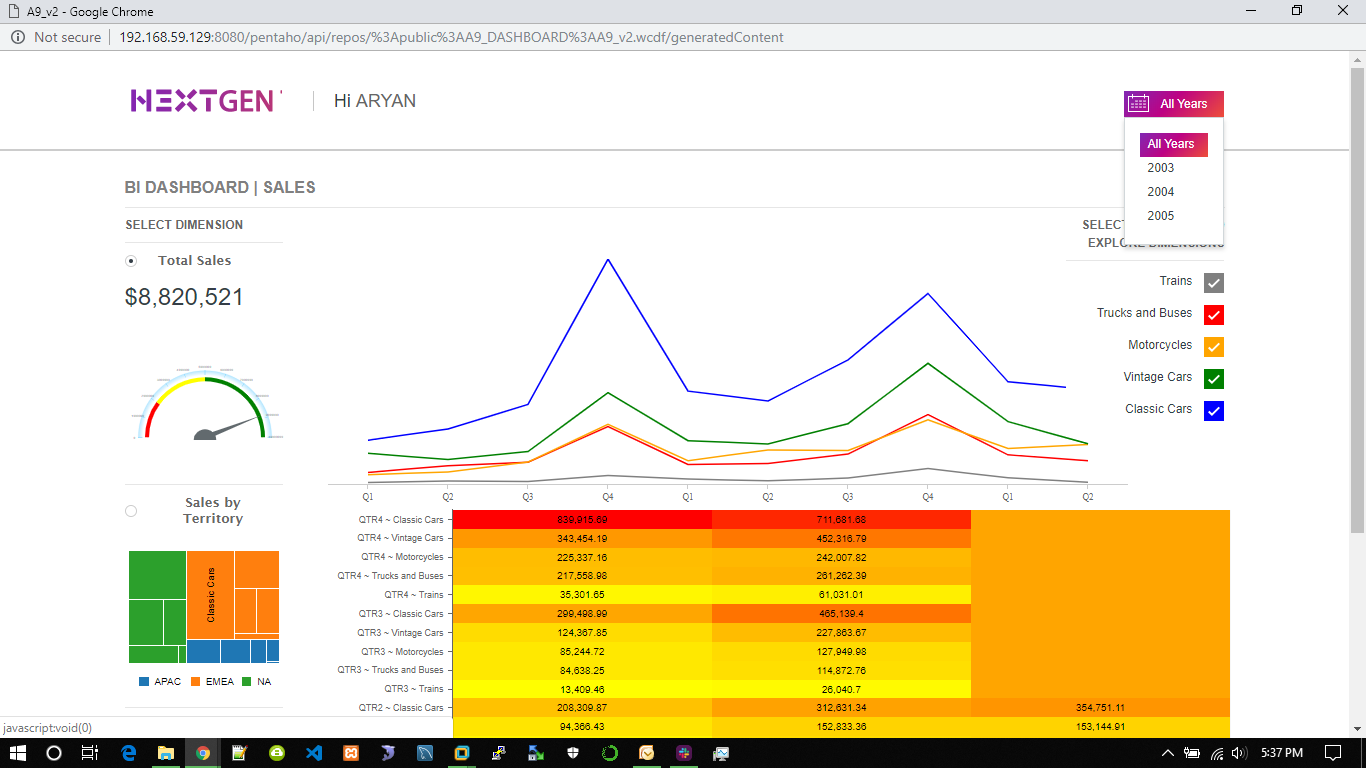 Enlarge
02 — Transform and validate records with business logic, lookups, and cleansing routines.
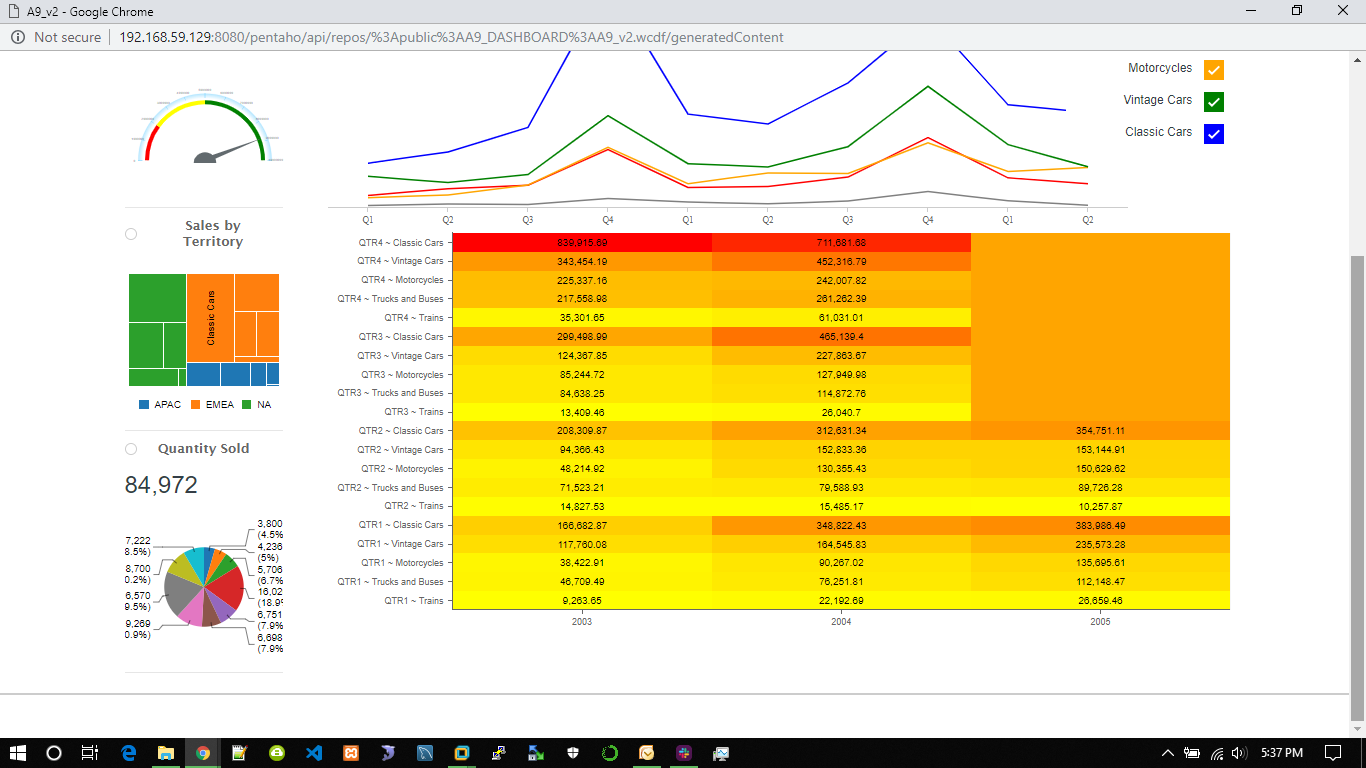 Enlarge
03 — Model dimensions and analytical cubes with verified database schema mappings.
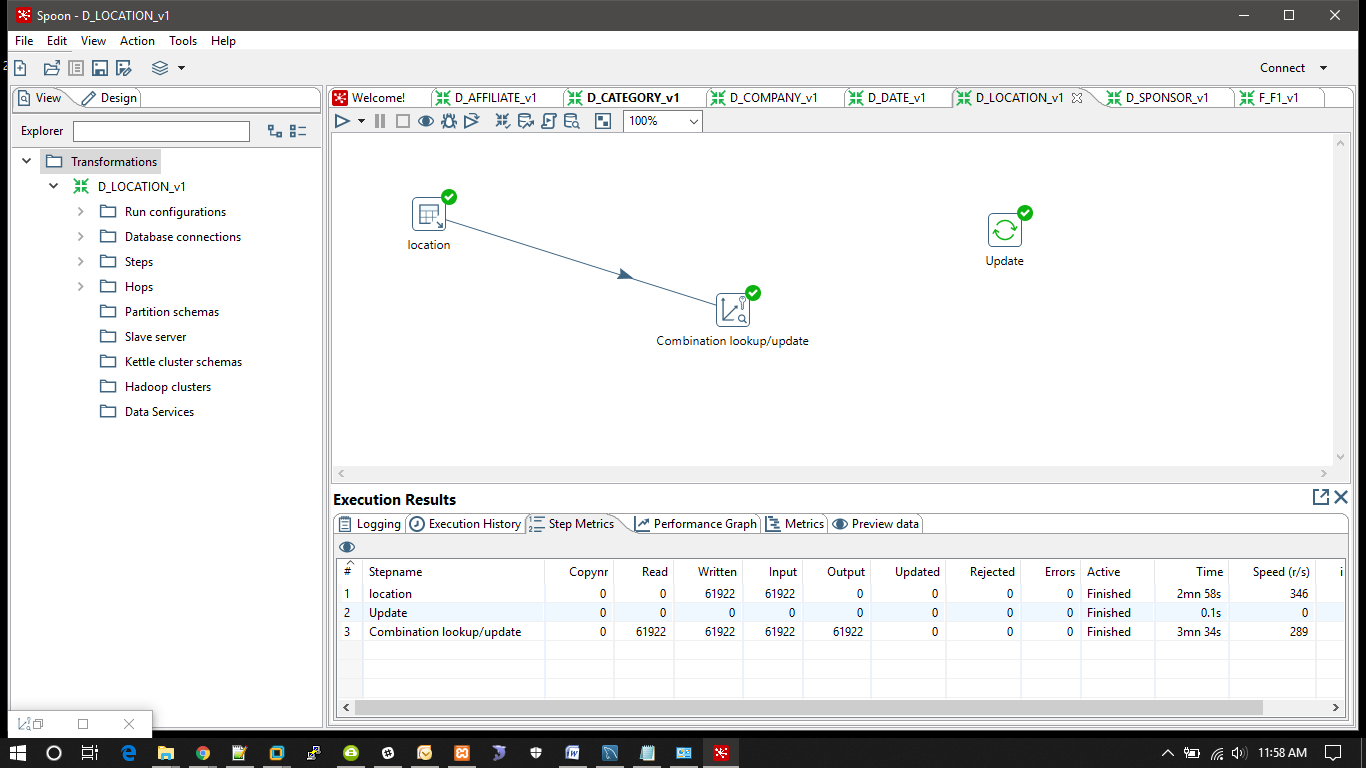 Enlarge
04 — Publish business reports and dashboards from multidimensional Schema Workbench definitions.
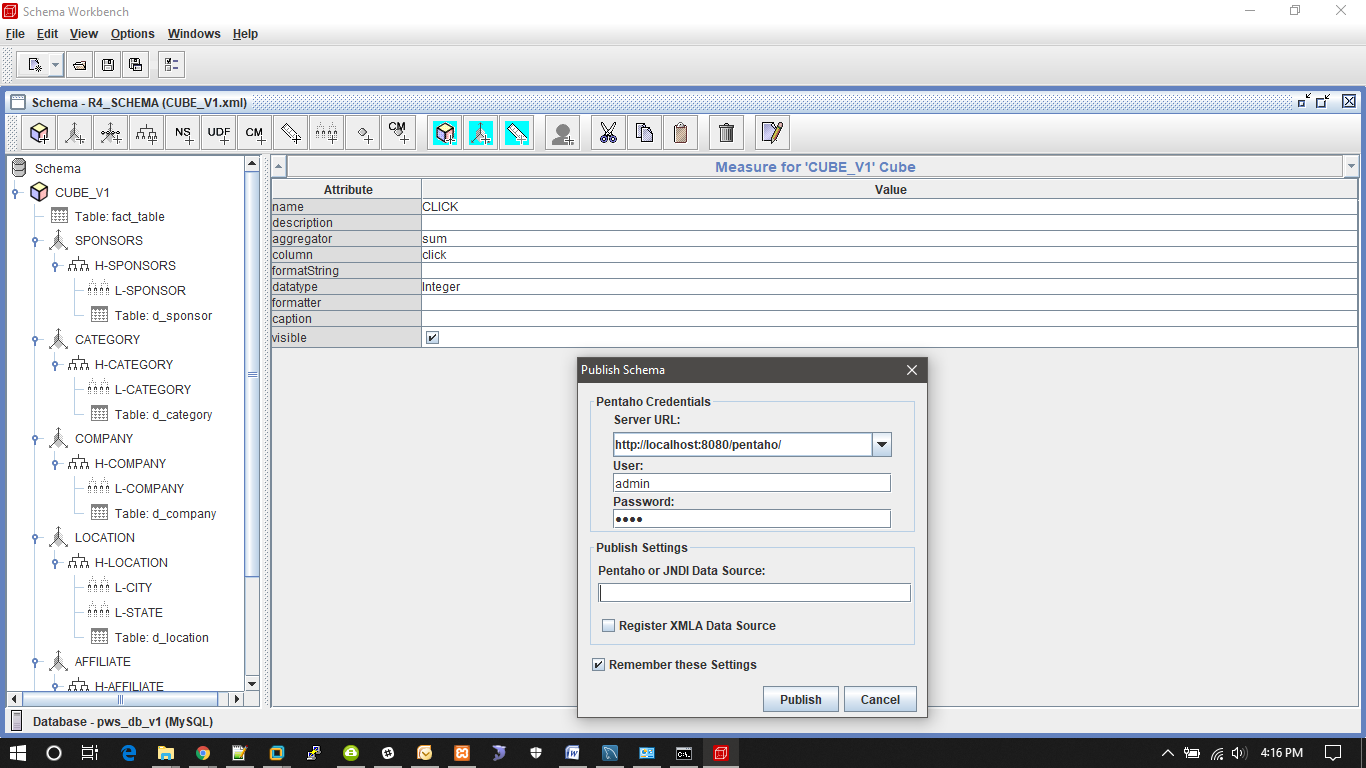 Enlarge
05 — Interactive Pentaho Business Analytics dashboard with multi-metric drill-down.
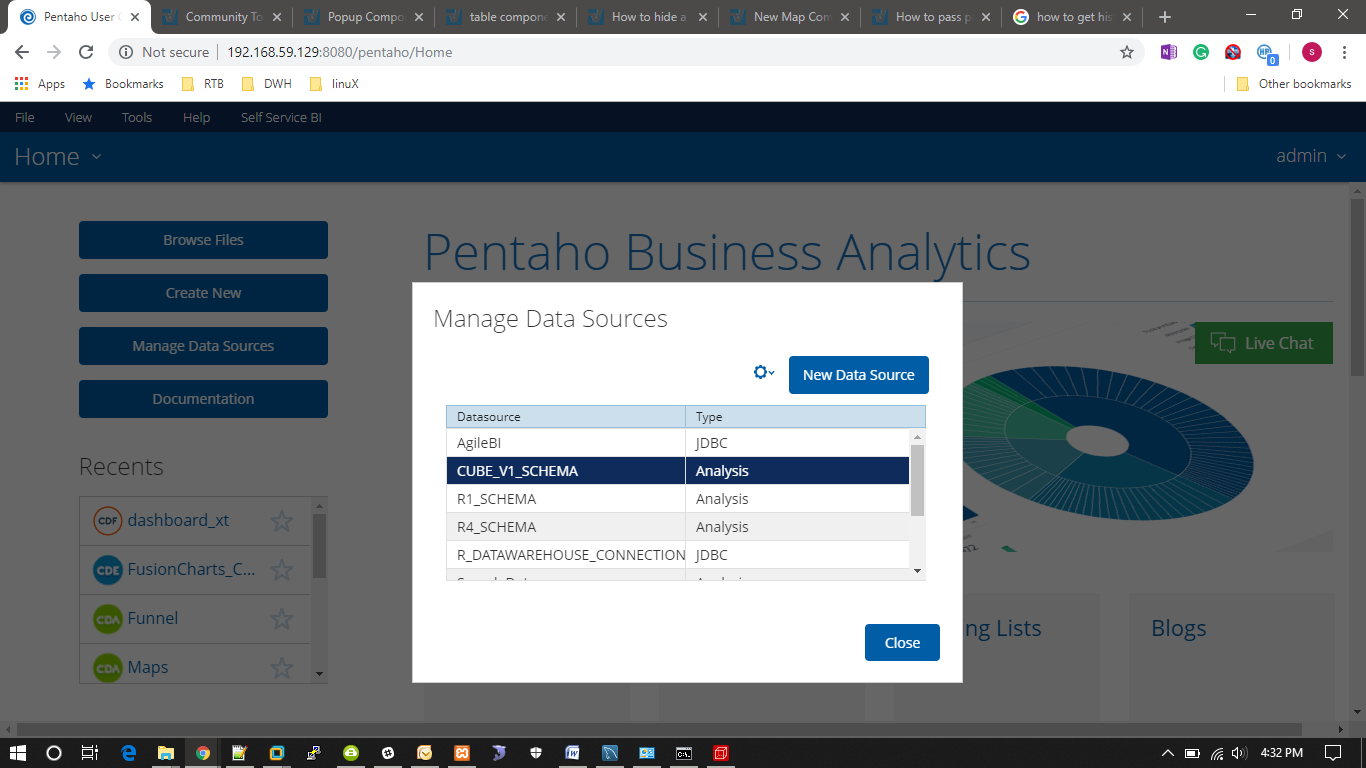 Enlarge
06 — Tune data access and reporting performance across dimensional hierarchies.
Data pipelines must account for schema evolution, null-value propagation, character encoding differences, and time-zone conversions. Multidimensional cube design requires careful hierarchy definition to prevent combinatorial explosion in aggregation tables.
Documented technologies, frameworks, and protocols utilized across this domain:
The materials show an end-to-end Pentaho-oriented workflow, including transformation interfaces and reporting screens. The work illustrates the integration between data engineering and the business intelligence layer.